CAÑON CITY, COLORADO
The rain that fell last night brought ash. Cars and bikes that were outside were covered with spotted ash. But at least the area got some needed rain.
I did not want to wait for the 6:00 a.m. breakfast at the Super 8 Motel and instead went to McDonalds hoping they would open before 6:00. This one left me shaking my head. Thousands of cyclists, most of whom actually like McDonald’s, at least for breakfast – those hotcakes supply carbs — and all wanting to roll out early for a 95-mile day – the fourth day in a row of 85+ miles.
And the McDonald’s was closed. Well, not closed completely because there were workers inside at 5:45 a.m. But they weren’t budging. The line outside was long at 6:00 a.m. when they appeared to reluctantly open the restaurant. The service was very slow. I was not a fan.
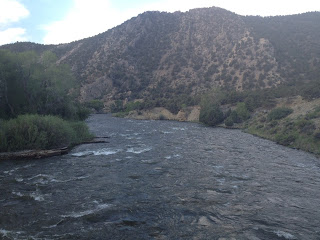
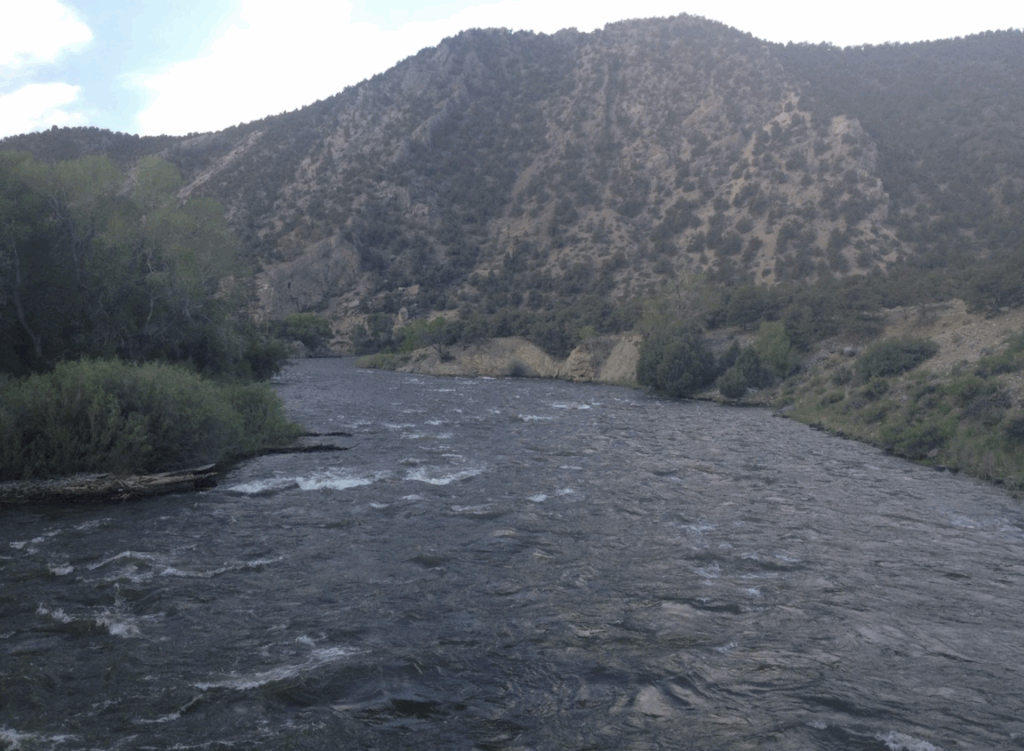
When I rolled out from McDs at 6:20, it was cold. The usual 48 degrees (9 ℃). We rode through Big Horn Sheep Canyon, but I didn’t see any big horn sheep.
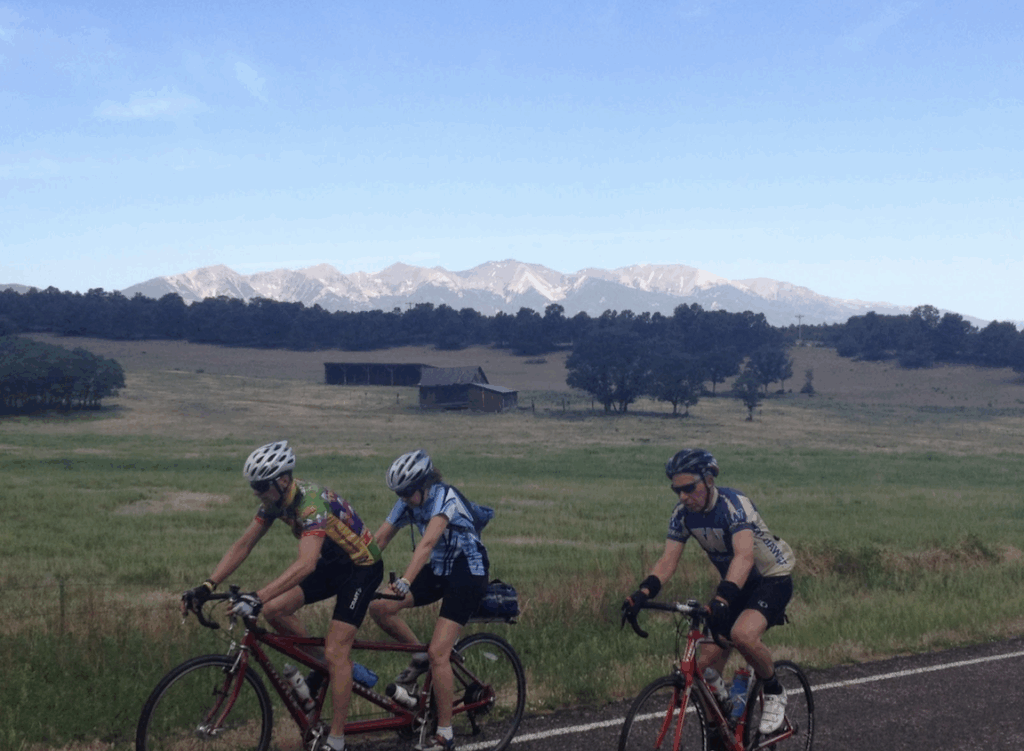
At Mile 25, we turned right in Cotopaxi and began a climb on a country road. Not all did. There was a traffic sign which stated, “US 50 OPEN,” and a number of cyclists decided for whatever reason to travel US 50 to Cañon City. Although this was the original planned route, all RTR support was on the new route. These riders were on their own. I didn’t go because I respected the organization and I wanted the extra miles. Bragging rights, you know.
It actually went deeper than that. The organization offered us two options for today. One was to ride the new redesigned 95-mile route, and the other was to take a bus. They made it clear that they did not want cyclists on US 50, even if it was open. If they had to close the road again, they could not evacuate all the cyclists. Also, they would be in the way of emergency equipment. To ride the “renegade route” was an irresponsible option, but it did not stop some riders, including one of the bloggers for the Denver Post.
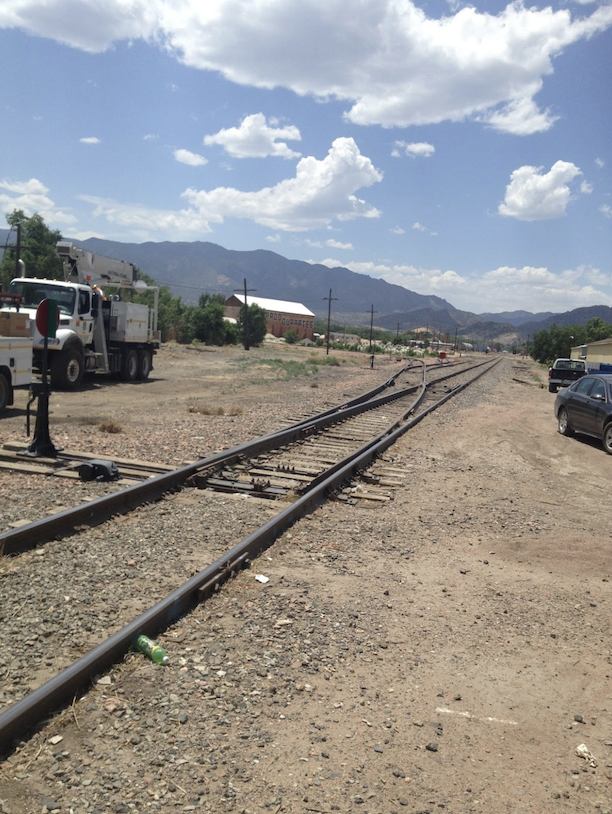
The Royal Gorge had burned. No riders could go through there, but they could see across the gorge from US Rte 50 and see the Royal Gorge Bridge. I wish I could have seen it, but I chose not to. Plus, I would have a much more memorable day.
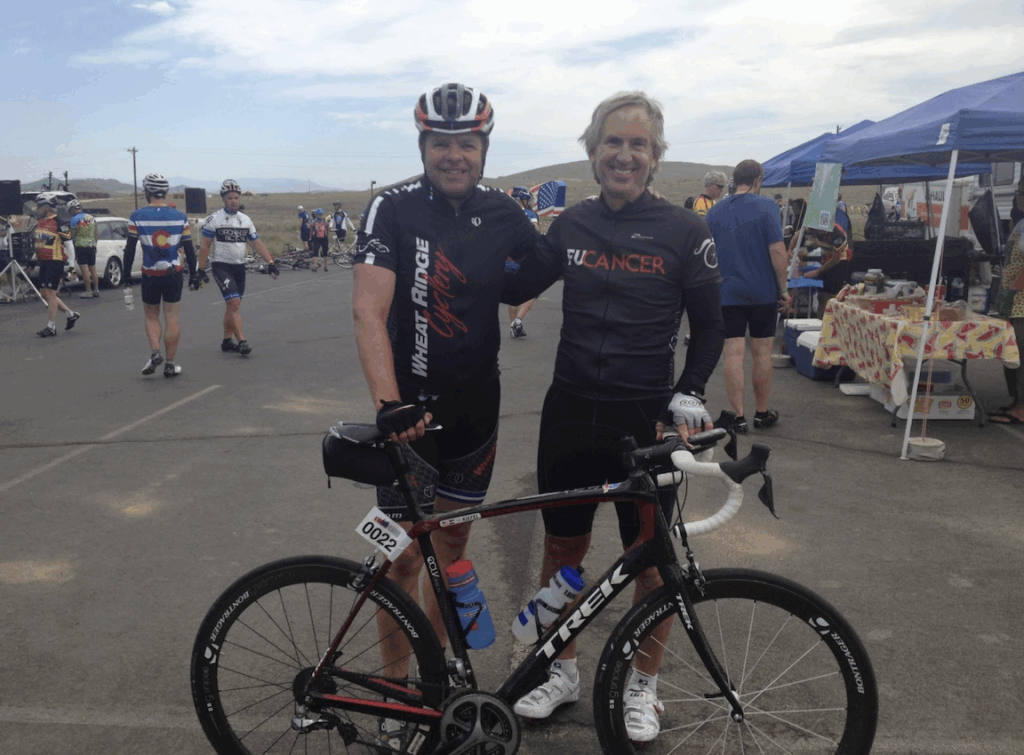
After the second rest stop, I saw Ron Keifel and his sister, Erlinda, pull out. I was close behind. Within a few minutes, I was side by side, then shoulder to shoulder, with Ron. Erlinda motored ahead. For 17 miles, we chatted. Ron regaled me with stories from the Tour de France, Giro d’Italia, Tour of Switzerland, and more. We talked about cycling, Lance Armstrong, Bob Roll, and more. And we chatted about life.
During this time, there was a third rider on our two wheels. She sat in for a free ride. Ron is as down to earth person as you will meet. He talked about not riding much and having a sore butt and legs. Just as we were pulling into Westcliffe, where there was an aid station, he disappeared.
As I turned the corner somewhat bewildered, a rider said to me, “Your friend just stopped and took a break.” Did I just drop a seven-time Tour de France rider? Really? Oh, this is awesome!
At the aid station, I was a couple of hundred meters behind the Kiefel group as they rolled out and wasn’t about to integrate again. Nor could I catch them. For the next 10 miles, I watched this group stay 200 meters ahead. And then on a false flat, my legs felt good. I picked up the speed and started passing lots of people (except for the Keifel group). I flew by the woman who had been sitting on with us earlier and with the Keifel group after the aid station. She explained she could not stay with the Keifel group. I invited her to follow my wheel. I pulled her to the next aid station.
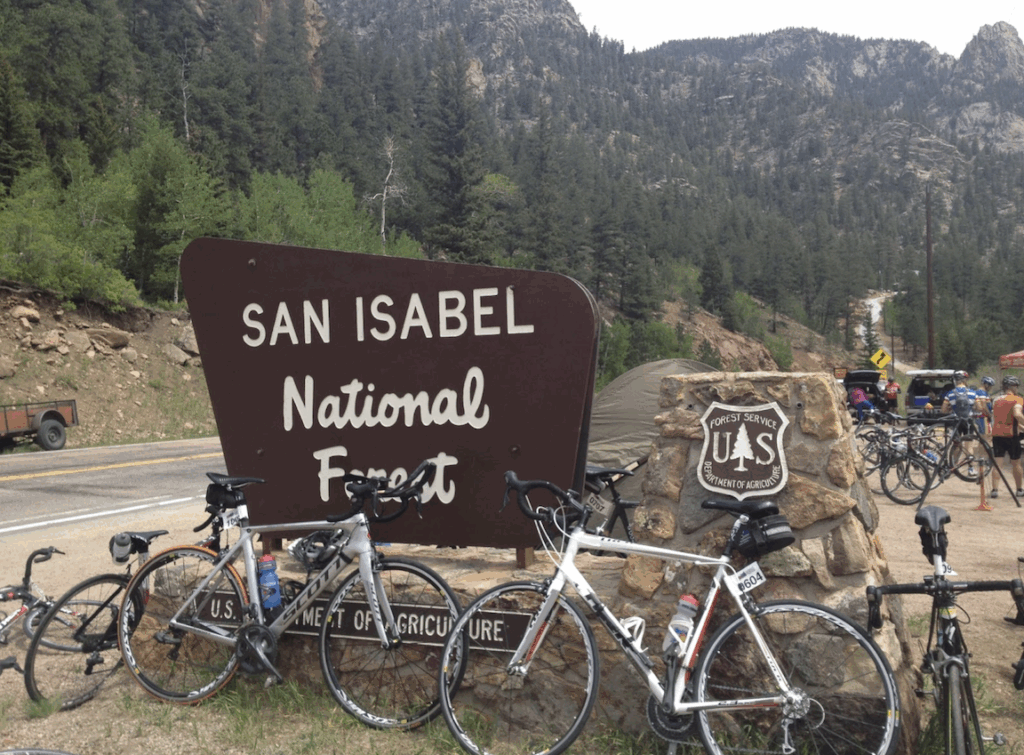
After going through Hardscrabble Pass, I rolled out of the San Juan National Forest by myself. The descent was steep and technical. I quickly got up to 48 mph (77 kph) but applied the brakes. And I saw where one rider had just gone over the guard rail. Oh boy.
“Numerous Ride the Rockies cyclists crashed and were sent to the hospital on Friday as they attempted to maneuver the descent of Hardscrabble Pass in Custer County, a treacherous hill added to the route when the course was altered for Royal Gorge fire road closures. Riders reported crashes that sent people over guard rails while biking switchbacks along the downhill section of the pass.” 1
After seeing the carnage on the descent, I sat up and took it carefully. While the run-in to Florence looked to be all downhill on the profile, the reality is it flattened out and got hot. I was struggling. I had one group of three pass me and knew I could follow their wheels. But I knew I was too gassed to help and didn’t want to simply sit on. I let them pass.
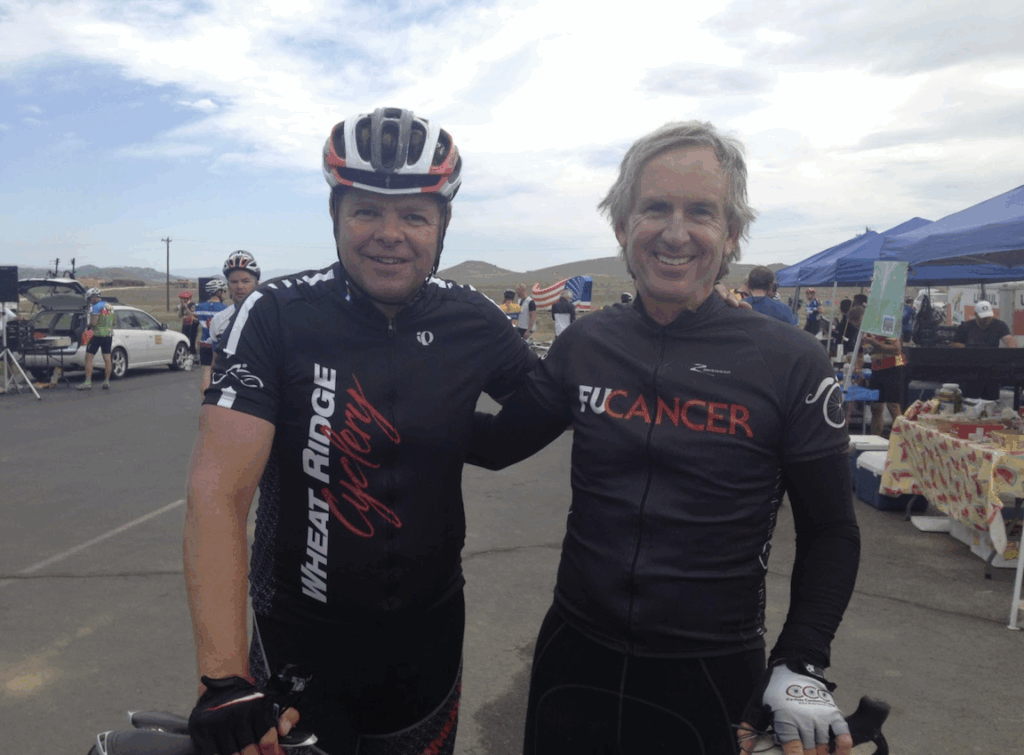
About five minutes later, the Kiefel group passed me. And Ron called out my name. It was an instant energy boost. I joined his group, and in short order, we passed the group that I was too tired to follow. In Florence, I moved up to talk some more with Ron.
After our last stop in Florence, I rolled out, and we quickly had four, but I excused myself as not wanting to work anymore with anyone. I was pretty gassed. But I did want to stay ahead of the Kiefel group because it would be embarrassing to get caught yet again. And I managed that.
I finished the day, added some bonus miles to make 100, and attended the cycling seminar. While Chris Carmichael was the featured speaker, and gave the same “caught up in the era” excuses as we heard all week, the highlight was Margaret Rae Tennant, a woman with Parkinson’s Disease who was riding in this week’s tour. She presented her video, Better on a Bike, and received a standing ovation.
At the seminar, a woman from the US Geological Survey named Jane spoke and told how she tried to follow the wheel of Ron and “another rider” and was just hanging on. Oh yeah, I remember her — on the ride into Alamosa, she was calling the shots and wasn’t too nice. And now she was thanking Ron and me for pulling her — and she was also the rider that I pulled back to the Keifel group on the false flat. That felt good.
Just prior to the seminar, I was chatting with Wayne Stetina. He had been a top U.S. amateur and competed for the USA in the 1972 and 1976 Summer Olympics. We were talking about the accidents on Hardscrabble Pass, and my humble brag was that I had gone 48 mph before touching the brakes. He had reached 40 and then said, “I never bomb a descent that I don’t know.” What a cycling and life lesson that was for me. He was right, and that was sure to stick with me.
___
1 The Denver Post, June 15, 2013

Recent Comments